"Today, a particularly insidious obstacle to the task of educating is the massive presence in our society and culture of that relativism which, recognizing nothing as definitive, leaves as the ultimate criterion only the self with its desires. And under the semblance of freedom it becomes a prison for each one, for it separates people from one another, locking each person into his or her own "ego"." Pope Benedict XVI, in a speech given last June, showed that the issue of relativism is as contentious today as it was in Ancient Greece, when Plato took on the relativist stance of Protagoras.
Relativism is a school of philosophical thought which holds to the idea that there are no absolute truths. Instead, truth is situated within different frameworks of understanding that are governed by our history, culture and critical perspective.
Why has relativism so radically divided scholars and moral custodians over the centuries? How have its supporters answered to criticisms that it is inherently unethical? And if there are universal standards such as human rights, how do relativists defend culturally specific practices such as honour killings or female infanticide?
You can download or listen to the piece here. Thanks to a reader on Amy Welborn's blog.
20 January 2006


16 January 2006
Some thoughts on two views of art history
In an earlier post, I put up a link to Roger Kimball's post reproducing the text of his talk at the Studio School on the New Criterion blog Armavirumque concerning his head-to-head with the art historian Michael Fried. Kimball's talk takes on the themes of his book—which I have not read but have been vaguely intending to, The Rape of the Masters—in which he lays out his criticisms of current academic art history, namely in its concern with "theory." Kimball concludes his post with this summation as to the role of the art critic:
In my view, it often happens that the most a critic can do is to remove the clutter impeding the direct enjoyment of art. True, that clutter sometimes includes the debris of ignorance or insensitivity, and in this respect art critics and art historians can provide useful guideposts that make it easier to see the work for what it is. But at bottom, their function is a humble one: to clear away the underbrush that obscures the first-hand apprehension of works of art.
Of course, this modest task has an ambitious corollary motive: namely, to help restore art to its proper place in the economy of cultural life: as a source of aesthetic delectation and spiritual refreshment.
This de-cluttering role is the approach that Kimball opposes to Prof. Michael Fried's "academic" art history which rather than clarify, supposedly obscures the work of art under a variety of interpretations—interpretations which expose supposed gender and power relationships or Freudian psychoanalytic undercurrents. Prof. Fried's art history isn't really concerned with anything so mundane—and perhaps more importantly—so subjective as appreciation, but instead is concerned with the arguably more "significant" task of interpretation.
I would like to agree with Mr. Kimball. Lord knows it would probably make my life somewhat simpler. But I find myself in the somewhat unfortunate position of agreeing neither with Mr. Kimball nor with Prof. Fried. Let me attempt, before proceeding further, to summarize what I perceive to be each their basic points of view: On the one hand is the "modernist" view held by Kimball, that the central goal of art history and criticism is apprecation and enjoyment. The connoisseur, that person of ultra-refined tastes and sensibilities leads you, the unrefined viewer, to see what he or she sees and thus identify that work of art with a certain degree of value and worth.
Fried takes the other, so-called "postmodernist" view wherein all systems of value are considered to be relative. Therefore, the art historian cannot possibly undertake the task of encouraging the viewer's appreciation. So instead it sticks to more, if not objective, at least impersonal task of interpreting what the work means. This method is not at all concerned whether or not an artist is "good" or "bad" but rather what the symbols in a given work of art means and where these symbols come from historically and how they relate to other works of art. This works on two levels: On one level the artist employs a set of signs within a work of art that allow it to be understood, for instance two intersecting perpendicular lines can make a cross can refer to aspects of Christian belief; and on the other level, the appearance of crosses in multiple works of art allow them to be grouped together and understood both in terms of similarity and difference.
If this were all that postmodernism was up to, it could hardly be supposed anyone would object. It's purpose is even more ostensibly more humble in so far as it proposes that it is more "scientific" than Kimball's. It is not concerned with saying which work of art has more value than another or even to help the viewer to evaluate (which, by the way, is what appreciate means), but merely to categorize and identify, to apply, so to speak, genus and species to works of art.
The connoisseur is almost always concerned with technique and manufacture; the hisorical critic with symbols and meaning, since they are more classifiable than the vagaries of paint application.
But the guise of science has allowed broad liberties to be taken within the field of art history. Often times, the task of interpretation, as Kimball rightly points out, becomes one of torturing works of art by casting them entirely in terms of psychoanalytic Freudianism. In fact, much of art history is steeped in psychoanalysis—Freudian, Jungian, and Lacanian seem to be the most popular—probably because both came of age at about the same time and both were concerned with the interpretation of symbols, and both, though circumscribed by subjectivity, like to posture as objective. Fried's approach is colored by psychoanalysis which allows him to make amazing intellectual leaps in his interpretations of painting and allow, him to, apparently, leave the work of art behind all together as he dives deep into the depths of the painter's psyche. It's all fine and well if you believe that psychoanalysis is true, but if you don't then the results of the psychoanalytic approach appear laughable at best, pernicious at worst. Perhaps the worst thing about the psychoanalytic approach is that it forecasts results. It assumes that whatever the work of art is presumably about, is in fact, a screen for another—usually seedier—meaning.
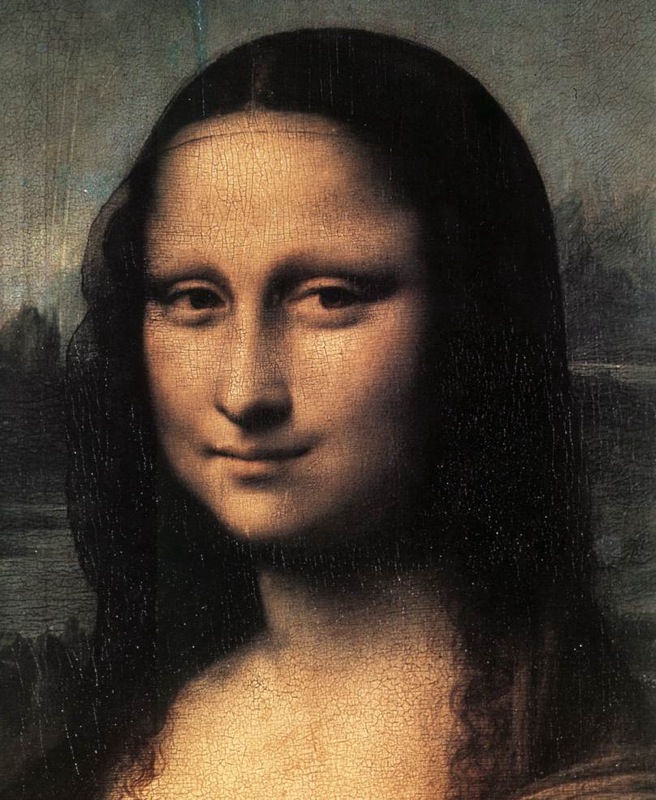
So, it's possible for the art historian to impose a false interpretation on a work of art. But this suggests that the only right interpretation of a work of art assumes that the work of art is a true and complete representation of the artist's intentions and that any symbolic content ought to be taken at more or less face value. If, then, a work of art becomes an accretion of collected meaning as the Mona Lisa has become, then the work of the art historian is to exhume its "original" meaning.
But this is problematic too. The original meaning and the intention of the artist are, practically speaking, just as speculative as Fried's psychoanalytical interpretations. But more significantly, the artist's intentions even when known and understood often don't account for the obvious fact that works of art partake of systematic conventions, perpetuating received ideas about what art is and how it functions. Sometimes these conventions, which are powerful forces sometimes inverted or parodied but rarely if ever absent, are at work despite the artist's stated intentions. Sometimes, the artist's intentions and the conventions of art exist butted up one against the other within the work of art in conflict with one another. In those cases, the work of the art historian is to uncover this state of affairs and present it to the audience. In this case, it would be intellectualy dishonest and wrong to merely "unclutter" the work of art for the viewer, when what it needs instead is precisely a good cluttering up! The temptation exists, doubtless, as Fried is testimony to, find and present such clutter in every work of art. But perhaps it is not wrong to say it is there, when really, the complex of events which produce works of art preclude the romanticized economy of the artist in his or her studio engaged in "self-expression."
Because I do not believe in psychoanalysis, I can't really agree with the intellectual assumptions which underpin most of the thinking of contemporary art historians and cultural critics. But because, works of art are more complex than mere objects of aesthetic enjoyment, I can't really take the modernist-connoisseurship position either. More on all this as it develops.
The Garden of the Soul
Because I was in Portsmouth over the weekend, I went to the Episcopal church down the street on Sunday. One of the things that I must say I will miss tremendously once I have finished converting to Roman Catholicism is Rite I in the Book of Common Prayer. The fact that, as far as I know, there doesn't seem to be anything really equivalent to it in the Catholic church has always been a bit of a mystery to me and a source of aggravation, since the BCP is both an exceptional piece of literature and a convenient devotional guide.
Anyway, all that has changed now. One of the other reasons that I go to this particular Episcopal church when I am in town is that one of my very good friends attends there as well: George Tussing. George is without doubt one of the most important and influential people in my life. If there is anyone I have to thank (or to blame) for my decision to go in for art history, it is him, since he was my very first art history teacher and one of the few who really understands and cares about art (and is himself an artist). So when I saw George at church on Sunday we got to talking about the Episcopal church and my conversion and he told me that he had this book he wanted to give me.
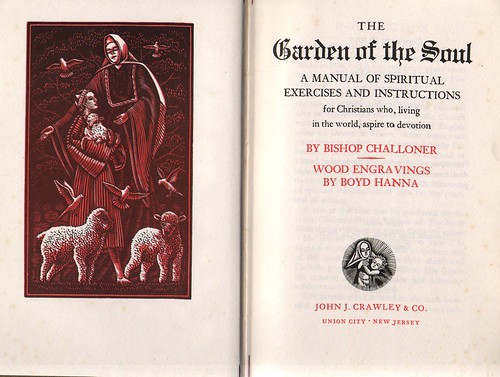
The book, as it turns out, is this book, The Garden of the Soul, by an English bishop named Challoner and originally published in America in 1776. It's a very beautiful book, with morning and evening devotions, prayers, supplications, hymns, the ordinary of the mass and a bunch of other stuff. It's even illustrated with woodcuts (take that, BCP!) Needless to say, I am extremely excited about it. I'll have to put it next to my bed, so that I don't forget to use it.
14 January 2006
Is there even such a thing as "Protestant" art?
Friend MM has posted an interesting observation about the lack of depictions of Christ, especially crucified, in Protestant churches. In my own experience they are becoming rarer and rarer. You can view my comments there and leave some of your own.
12 January 2006
Something worth watching
I started watching the TV show "Monk" because there was a free promotional episode on iTunes. If you have not seen this show, I highly recommend it. It stars Tony Shaloub as the obsessive-compulsive private investigator, Adrian Monk, and Traylor Howard as his assistant, Natalie Treeger. The basic premise is that Monk's neuroses, which inhibit him in about every other area of his life, give him an accute attention to detail, allowing him to detect clues that other people miss. But the show is extremely enjoyable, funny, well-written and extremely gentle and warm in its portrayal of its characters and their relationships. It's even won a bunch of awards. It airs Friday nights at 10pm on the USA network (of all places).
Charlie Finch on the new religion, Art
My friend ES sent me the link to this article on Artnet yesterday, concerning the quasi-religious aspects of contemporary art. Truth be told, I am pretty out of the loop in terms of the contemporary art scene. I have caught up with art history about as far as the '60s and after that things get pretty blurry (perhaps, then Donald Kuspit's forthcoming book, A Critical History of 20th-Century Art will fill a void, who knows). Anyway, Charlie Finch's article is interesting and worth a scan, which doesn't take more than a few moments.
The more important question, however, is is art a substitute religion? As someone aligned with a full-fledged mainstream, tax-exempt religion, I hardly think so, or at least, it is not a substitute religion any more than a host of other substitutes, like politics or money or popular culture.
I suppose this is the logical result of a conceptual shift in terms of what art is that happenedhttp://www.blogger.com/img/gl.link.gif around the turn of the last century. Art and aesthetics were seen as a path to the transcendent apart from any other mediating body. Or at least that's what Kuspit seems to be suggesting (see above link). There are certainly people, who exhausted of the scientific positivism and materialism of the nineteenth century sought refuge in the subjectivities and vagaries of art. But that doesn't really account for the apparent religious response to art today. Not altogether, anyway.
I guess your response to this situation depends on whether or not you think it is a problem and if so, what the solution might be. On different days I feel differently about it, ranging from deep concern to benign unconcern to total indifference. If you do think that there is a problem, then the only solution to offer is to propose that art be put in the employ of interests outside itself. Art would have to be commissioned and useful, e.g. portrait commissions, religious pictures, etc. Abstract art would probably become solely the province of corporations seeking non-objective, and therefore not objectionable, wall decorations.
Honestly, this is an impossible alternative. Art will remain, as far as I can tell, insular and self-reflexive for the time being. Although, there will always be dissenters.
The more important question, however, is is art a substitute religion? As someone aligned with a full-fledged mainstream, tax-exempt religion, I hardly think so, or at least, it is not a substitute religion any more than a host of other substitutes, like politics or money or popular culture.
I suppose this is the logical result of a conceptual shift in terms of what art is that happenedhttp://www.blogger.com/img/gl.link.gif around the turn of the last century. Art and aesthetics were seen as a path to the transcendent apart from any other mediating body. Or at least that's what Kuspit seems to be suggesting (see above link). There are certainly people, who exhausted of the scientific positivism and materialism of the nineteenth century sought refuge in the subjectivities and vagaries of art. But that doesn't really account for the apparent religious response to art today. Not altogether, anyway.
I guess your response to this situation depends on whether or not you think it is a problem and if so, what the solution might be. On different days I feel differently about it, ranging from deep concern to benign unconcern to total indifference. If you do think that there is a problem, then the only solution to offer is to propose that art be put in the employ of interests outside itself. Art would have to be commissioned and useful, e.g. portrait commissions, religious pictures, etc. Abstract art would probably become solely the province of corporations seeking non-objective, and therefore not objectionable, wall decorations.
Honestly, this is an impossible alternative. Art will remain, as far as I can tell, insular and self-reflexive for the time being. Although, there will always be dissenters.
07 January 2006
Courbet, Modernism and Postmodernism

Roger Kimball has posted the text of a talk given at the Studio School on Armavirumquein which he lays out his critique of current academic, postmodernist art history. It's lengthy but worth the read, I'd say. I have my own set of thoughts on the matter which once I have sorted out I hope to get posted.
24 December 2005
Merry Christmas
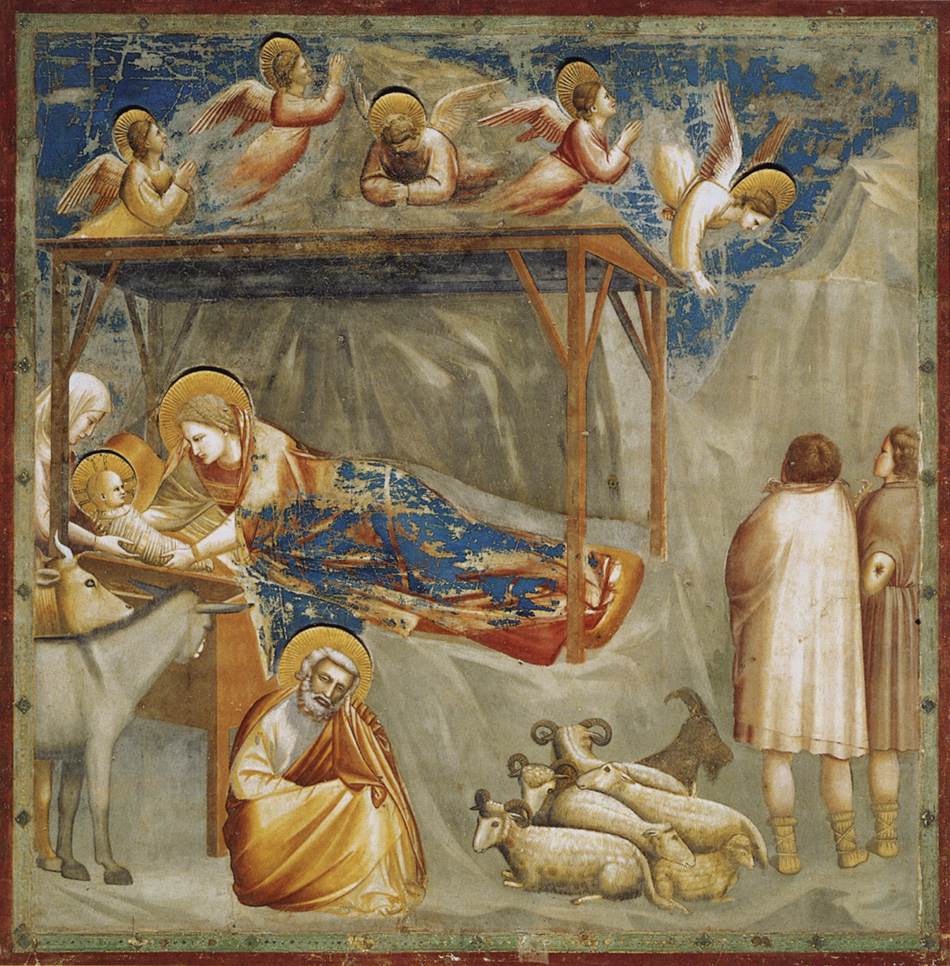
For unto you is born this day in the City of David a Saviour who is Christ the Lord. Glory to God in the highest, and on earth, peace, good will to men.
21 December 2005

20 December 2005
War on Christmas
Hendrik Hertzberg probably ought to be given some sort of award for smugness. His article debunking the "War on Christmas" follows a fairly standard line of self-satisfied pseudo-reasoning--all those right-wingers who are complaining about the secularization of Christmas are just the most recent in a long line of people who complain about the how Christmas is under attack by the secular world. He puts up a few straw men—Henry Ford, the anti-Semite, and Bill O'Reilly, his own worst enemy—slaps a gloss of unsubstantiated historial reference on it and calls the typesetter. I got to this sentence here, "Just as Christmas itself evolved as a way to synthesize a variety of winter festivals, so the War on Christmas fantasy is a way of grouping together a variety of enemies, where they can all be rhetorically machine-gunned at once," when I realized that he was full of it.
What really bothers me about Hertzberg's article is—obviously—the sentence I have highlighted above. That on the one hand he poo-poos the self-appointed culture warriors for their unwarranted counter-attack while subtly undercutting the Christmas celebration. What absolute rot! (Frankly, I'd use stronger language, but my mother reads this blog.) Christmas was not a convenient way to celebrate a whole bunch of "winter festivals." No celebration based on such a notion would have persisted over 1700 years nor would it explain why Hannukah and New Years are still celebrated more or less concurrently. The origins of Christmas lie solely with the Church and not with any attempt to justify any pagan holidays. Not that it would matter if they had. The point of Christmas would still have been to commemorate not merely the coming of Christ, but the specific way of his coming, which is what makes Christianity what it is, that the God-head came "veiled in flesh."
People probably are being a little too paranoid about the state of Christmas. It does not seem likely that it will cease to be celebrated any time soon. While the holiday is being subjected to a slow neutralization of its essential message ("good tidings of great joy, which shall be for all people. For unto you is born this day in the City of David a savior who is Christ the Lord. ... Glory to God in the highest and on earth, peace, good will towards men"), I have no reason to think that this attempt to denature Christmas will succeed.
It does not, however, help the cause when Christian denominations of any stripe decide that Christmas is somehow an optional celebration, especially churches committed to evengelization, especially on one of the two days a year when they might expect to actually have non-Christians going to church. Such an action as these Churches who think that they do not need to have church on Christmas on a Sunday do lend credence to the appearance that Christmas is losing its focus.
On the other hand, it seems most people I know are planning to celebrate Christmas, people who 1) know full well what its "about," and 2) who do not believe what it is about. Friends of mine who are deeply athiestic have decorated their house more extravagantly than anyone else I know and have even set up a small creche in one corner (that they have deliberately set a small photograph of Elvis Presely behind it does not entirely negate their small acknowledgment of Christmas' real meaning). And while anecdotes may not count as hard proof, I even heard my local NPR affiliate (enemy of all things Christian) broadcasting a "Hark! The Herald Angels Sing" and "Joy to the World" this evening in their full gender-essentialist and God-centered language.
I don't believe that the controversy that Christmas elicits is in fact overshadowing what Christmas is all about and its message of un-looked-for redemption. Because the controversy draws more attention to it in the first place, and second of all, because underneath it there is still a steady current carols, movies, books, trees, presents, decorations, and so on and so forth which continually emphasize the miracle which Christmas celebrates. If and when Christmas really does need someone to defend it tooth and nail, I hope it will be someone other than Bill O'Reilly.
What really bothers me about Hertzberg's article is—obviously—the sentence I have highlighted above. That on the one hand he poo-poos the self-appointed culture warriors for their unwarranted counter-attack while subtly undercutting the Christmas celebration. What absolute rot! (Frankly, I'd use stronger language, but my mother reads this blog.) Christmas was not a convenient way to celebrate a whole bunch of "winter festivals." No celebration based on such a notion would have persisted over 1700 years nor would it explain why Hannukah and New Years are still celebrated more or less concurrently. The origins of Christmas lie solely with the Church and not with any attempt to justify any pagan holidays. Not that it would matter if they had. The point of Christmas would still have been to commemorate not merely the coming of Christ, but the specific way of his coming, which is what makes Christianity what it is, that the God-head came "veiled in flesh."
People probably are being a little too paranoid about the state of Christmas. It does not seem likely that it will cease to be celebrated any time soon. While the holiday is being subjected to a slow neutralization of its essential message ("good tidings of great joy, which shall be for all people. For unto you is born this day in the City of David a savior who is Christ the Lord. ... Glory to God in the highest and on earth, peace, good will towards men"), I have no reason to think that this attempt to denature Christmas will succeed.
It does not, however, help the cause when Christian denominations of any stripe decide that Christmas is somehow an optional celebration, especially churches committed to evengelization, especially on one of the two days a year when they might expect to actually have non-Christians going to church. Such an action as these Churches who think that they do not need to have church on Christmas on a Sunday do lend credence to the appearance that Christmas is losing its focus.
On the other hand, it seems most people I know are planning to celebrate Christmas, people who 1) know full well what its "about," and 2) who do not believe what it is about. Friends of mine who are deeply athiestic have decorated their house more extravagantly than anyone else I know and have even set up a small creche in one corner (that they have deliberately set a small photograph of Elvis Presely behind it does not entirely negate their small acknowledgment of Christmas' real meaning). And while anecdotes may not count as hard proof, I even heard my local NPR affiliate (enemy of all things Christian) broadcasting a "Hark! The Herald Angels Sing" and "Joy to the World" this evening in their full gender-essentialist and God-centered language.
I don't believe that the controversy that Christmas elicits is in fact overshadowing what Christmas is all about and its message of un-looked-for redemption. Because the controversy draws more attention to it in the first place, and second of all, because underneath it there is still a steady current carols, movies, books, trees, presents, decorations, and so on and so forth which continually emphasize the miracle which Christmas celebrates. If and when Christmas really does need someone to defend it tooth and nail, I hope it will be someone other than Bill O'Reilly.
Are you going to Heaven? Take the quiz and find out!
You can take the heaven quiz here. Be careful, some of the questions are deliberately misleading. Incidentally, according to the quiz, I am not going to heaven. Oh well. Guess I'll have to find a different quiz.
Oh, and by the bye, the Messiah has returned, is in China, and has said over a million words.
Oh, and by the bye, the Messiah has returned, is in China, and has said over a million words.
16 December 2005
What Rodney Stark says about Christianity
I found this over at Amy Welborn last night. There was another post about him yesterday but it has disappeared from her site with a bunch of other posts:
Rodney Stark in the Chronicle of Higher Education - How Christianity (and Captialism) led to Science
Thanks Amy.
Rodney Stark in the Chronicle of Higher Education - How Christianity (and Captialism) led to Science
Supposing that capitalism did produce Europe's own "great leap forward," it remains to be explained why capitalism developed only in Europe. Some writers have found the roots of capitalism in the Protestant Reformation; others have traced it back to various political circumstances. But, if one digs deeper, it becomes clear that the truly fundamental basis not only for capitalism, but for the rise of the West, was an extraordinary faith in reason.I Googled Stark because I had never heard of him. He is a sociologist at Baylor University. He has several books in the works which are apparently revisions of academic approach to early Church history. To me his views don't sound particularly new. GK Chesterson was saying this kind of thing a hundred years ago (has it been that long?), but it is unusual that Stark is a full-fledged academic and can say these things--which to avoid confusion, I think is great. Anyway, I can think of a few friends who might want to add Prof. Stark to their reading lists.
A series of developments, in which reason won the day, gave unique shape to Western culture and institutions. And the most important of those victories occurred within Christianity. While the other world religions emphasized mystery and intuition, Christianity alone embraced reason and logic as the primary guides to religious truth. Christian faith in reason was influenced by Greek philosophy. But the more important fact is that Greek philosophy had little impact on Greek religions. Those remained typical mystery cults, in which ambiguity and logical contradictions were taken as hallmarks of sacred origins. Similar assumptions concerning the fundamental inexplicability of the gods and the intellectual superiority of introspection dominated all of the other major world religions.
Thanks Amy.
15 December 2005
...Perceptions...
My friend Metafiz over at ...Perceptions... received a host of unpleasant commentators attacking his cost of the war in Iraq counter. Please visit his blog and leave him an intelligent, thoughtful comment to restore everyone's faith in humanity.
A trip down memory lane
While some of us trepidatiously await the inevitibality of purgatory, others among us are taking the bull by the horns and subjecting themselves, knowingly, to public humiliation. One such of these is Emily Yoffe, who can now add nude art model to her resume. Having been to art school and having been in on any number of "life" (read, buck naked) drawing classes, Yoffe's story not only rings true but answers some of my questions about the kind of people who think that nude modeling is a good way to make money. Hilarious, although it makes you think twice about any invitation to a cocktail party at which Ms. Yoffe will be in attendance.
Related is her aspirations as a lounge act.
Related is her aspirations as a lounge act.
New Comment Requirements
Due to some unwanted comment spam I am moderating all comments. We will see how this goes, and if it is a real problem, then I may relax the restrictions. Fortunately, my blog is not a free country and there is no such thing as free speech here.
14 December 2005
The Turn of the Tide
David Hartline thinks that the Church (already, of course, Triumphant) is becoming once again Ascendent. He says, "While there have been many ebbs and flows in the history of Catholicism, perhaps we are now beginning a new and promising flow of faith."
It's here. Via Amy Welborn.
It's here. Via Amy Welborn.
The How-To Book of the Mass
I was poking around the Internet a few days ago when I cam across this book, The How-To Book of the Mass. Since it promises on its cover "Everything you need to know but no one ever taught you," I was very excited. You see, despite having attended multiple confirmation classes on my way across the Tiber, they have yet to cover all the crucial details of how to participate in the mass. Most of what I have learned has just come about through regular attendance and sly glances at neighbors to see what they are doing and attempting to follow suit. So, I had hoped I had finally found a book that would give me all the answers I needed.
I haven't read much of it yet, but I think I have mixed feelings about it. Certain things I wanted to know are there (like does one bow/genuflect towards the altar or the tabernacle: as it turns out, it depends), but the text does not reproduce the text of the liturgy except in certain places, so it makes it a little hard to follow.
Perhaps I am being premature. I should probably read it to find out how helpful it will be. But there are many things that I want to see/do at mass, and don't know if the protocol for doing them is the same as in a good ol' high Anglican church. Can one make a profound bow to the processional cross? I have yet to see a Catholic do this, but the Episcops do it all the time.
If anyone else has read this and has an opinion or has read something of similar nature that they have found helpful, of course, let me know.
I haven't read much of it yet, but I think I have mixed feelings about it. Certain things I wanted to know are there (like does one bow/genuflect towards the altar or the tabernacle: as it turns out, it depends), but the text does not reproduce the text of the liturgy except in certain places, so it makes it a little hard to follow.
Perhaps I am being premature. I should probably read it to find out how helpful it will be. But there are many things that I want to see/do at mass, and don't know if the protocol for doing them is the same as in a good ol' high Anglican church. Can one make a profound bow to the processional cross? I have yet to see a Catholic do this, but the Episcops do it all the time.
If anyone else has read this and has an opinion or has read something of similar nature that they have found helpful, of course, let me know.
Subscribe to:
Posts (Atom)

 Posts
Posts

